
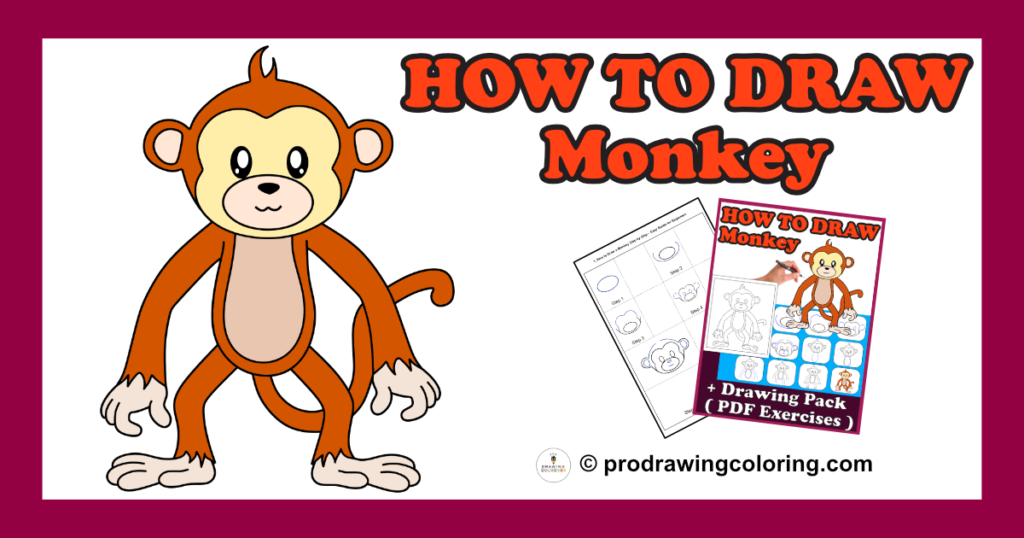
Welcome to Pro Drawing Coloring, your professional hub for mastering animal illustrations. If you are looking for a comprehensive tutorial on how to draw a monkey, you have landed on the right page. Our mission is to simplify complex shapes so that artists of all levels can achieve a professional result while enjoying the creative process.
Before we begin the technical steps, we invite you to explore our extensive library of monkey coloring pages. Practicing with a monkey drawing easy approach is much more effective when you also visualize different species and color patterns. Whether you are aiming for a simple monkey drawing or a more detailed character, our resources are here to support your artistic growth.
To ensure your success, we provide a complete toolkit for this lesson: a downloadable how to draw a monkey step by step PDF, an engaging video tutorial, and specialized drawing grids. These tools are designed to help you master the proportions of your monkey sketch from the very first stroke to the final detail.
1. How to Draw a Monkey: A Detailed Step-by-Step Tutorial
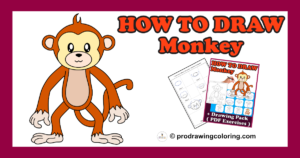
This section is optimized to satisfy the primary search intent for how to draw a monkey. We break down the 14-step process into clear, logical segments that focus on anatomy and character design.
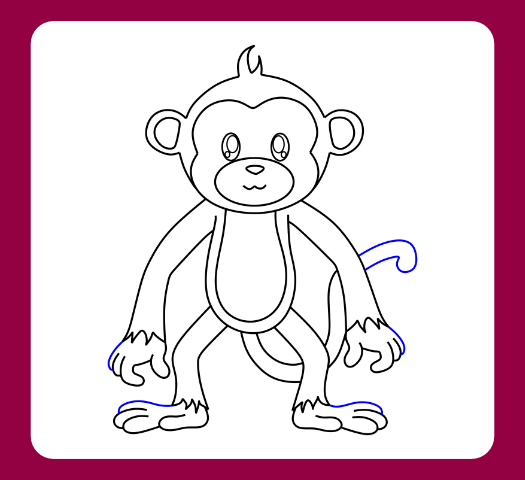
- Geometric Foundations: Every easy monkey drawing starts with basic ovals and circles to establish the head and torso.
- Feature Placement: We provide specific instructions on how to draw a monkey face, ensuring the eyes and snout are perfectly aligned for a cute, expressive look.
- Refining the Outline: Transition from a basic monkey outline drawing to a finished piece by adding fur textures and a dynamic, curled tail.
Step 1: Start with the Snout
Begin your drawing by sketching a horizontal oval in the center for the snout.

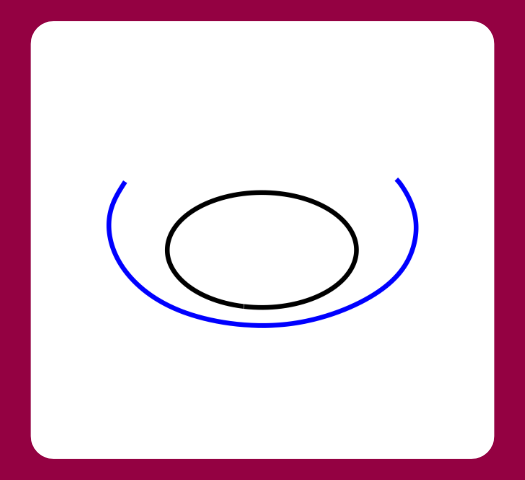
Step 2: Outline the Face
Add a wider curved line underneath the snout to define the lower face profile.
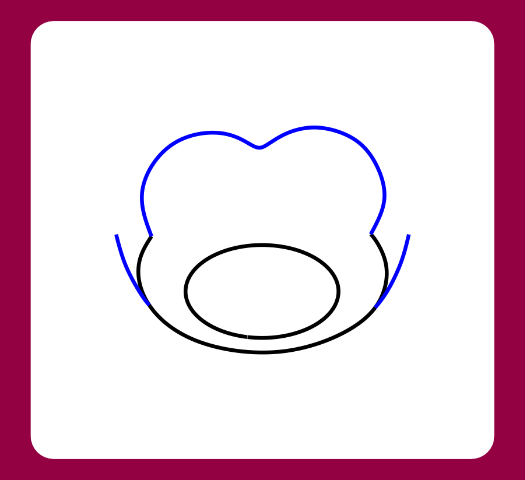
Step 3: Sketch the Brow Line
Draw a soft “M” curve above the snout to form the brow and inner face mask.
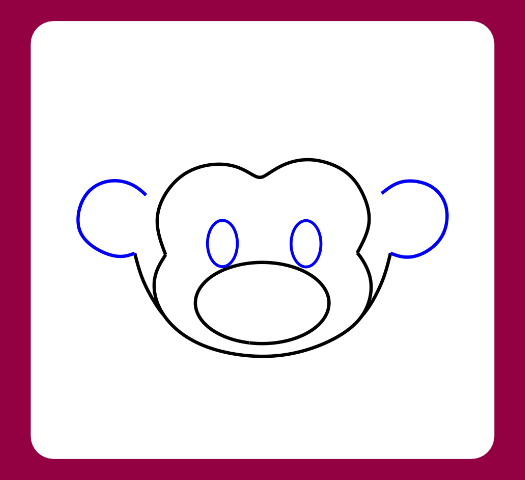
Step 4: Draw Ears and Eyes
Place two round ears on the sides and sketch two vertical ovals for the eyes.
Step 5: Finish Facial Features
Complete the face by adding a small nose, a happy mouth, and inner ear details.
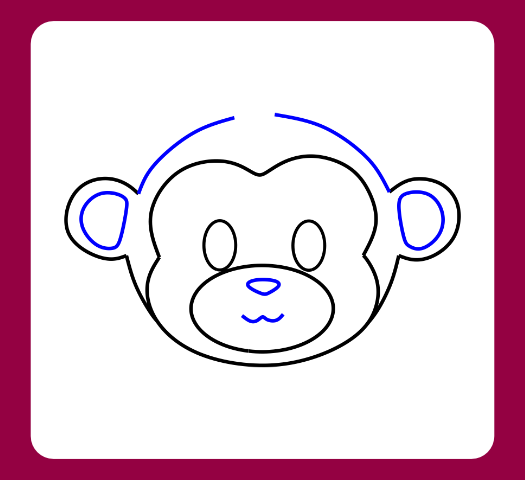
Step 6: Outline the Body
Draw the outer head circle with a hair tuft and extend a vertical oval for the torso.
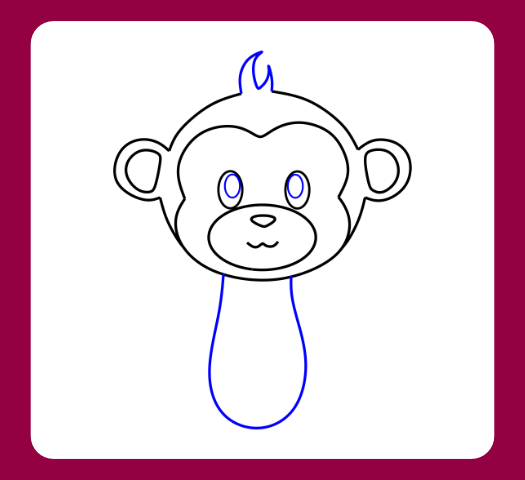
Step 7: Add the Underbelly
Draw a smaller oval inside the body to define the monkey’s chest and belly.

Step 8: Complete the Arms
Sketch two long, playful arms on the sides of the body for a lively stance.
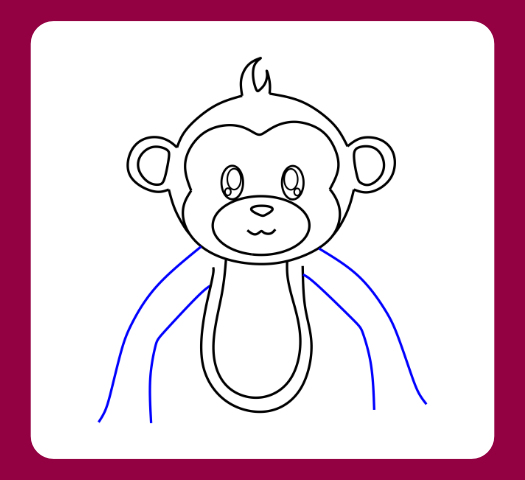
Step 9: Sketch the Legs
Add two bent leg shapes at the bottom of the body to establish a sitting pose.
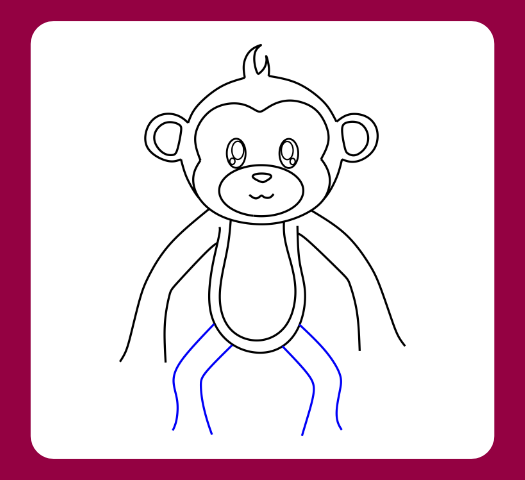
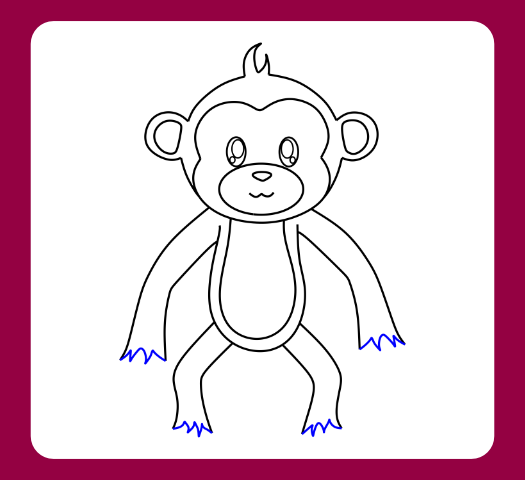
Step 10: Add Fur Details
Sketch small zig-zag lines at the ends of the limbs to represent fur texture.
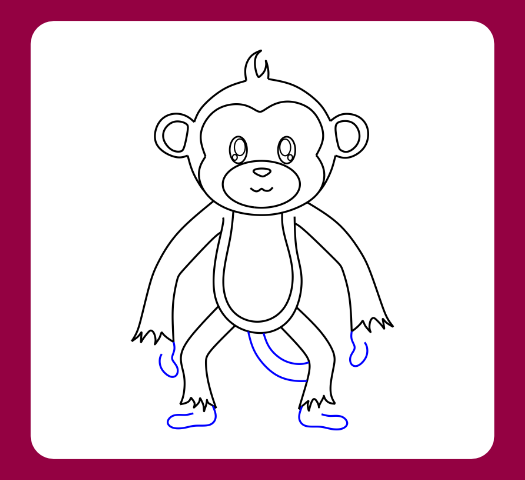
Step 11: Start the Tail
Start a curved line for the tail and add basic oval shapes for hands and feet.
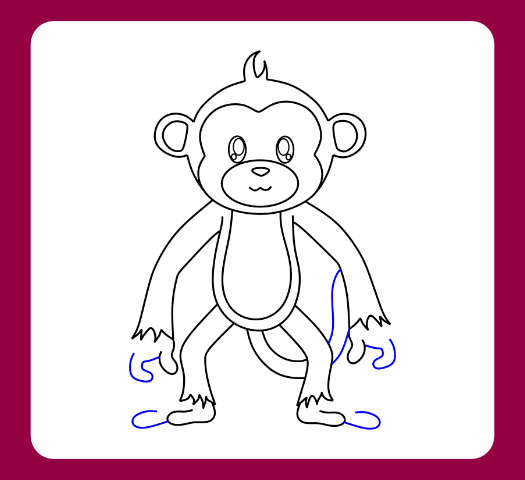
Step 12: Outline the Digits
Divide the hand and foot shapes into basic outlines to prepare for the fingers.
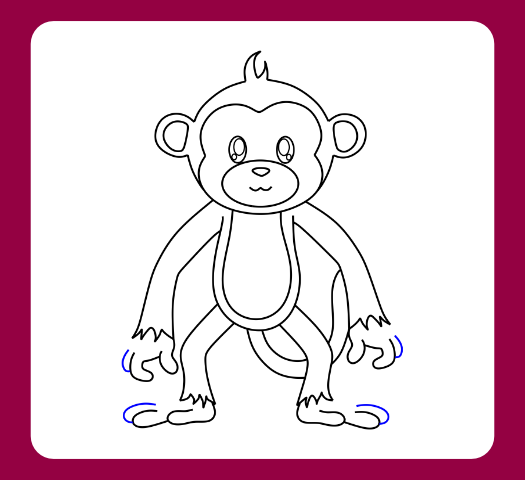
Step 13: Refine the Hands
Add curved details to the fingers and toes to make the limbs look realistic.
Step 14: Finish the Long Tail
Complete the drawing by extending the tail into a long, curled shape.
2. Get Your Free “How to Draw a Monkey” Practice Pack (PDF)
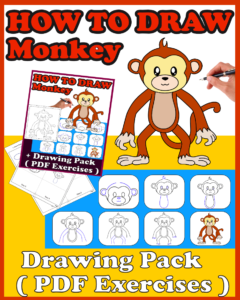
At Pro Drawing Coloring, we believe in providing high-value resources for offline practice. Our Practice Pack is specifically tailored for those searching for a simple monkey drawing guide they can print and use anywhere.
- Traceable Worksheet: Includes a monkey drawing step by step template to help you master the curves of the limbs and tail.
- Skill Building: This pack encourages repetitive practice, which is the secret to mastering how to draw monkeys with confidence.
About Monkeys: Primate Anatomy and Illustration Facts
Monkeys are diverse primates belonging to the Simiiformes infraorder, distinct from apes by their prehensile tails and skeletal structures. In the field of animal illustration, a monkey sketch requires an understanding of the cranium-to-snout ratio and the appendicular skeleton’s range of motion. This tutorial applies constructive drawing techniques to simplify the biological anatomy of the Cercopithecidae and Platyrrhini families, making the complex morphology of these mammals accessible for digital and traditional illustrators.